Mama Rwanda economic empowerment
Mama Rwanda Women's Poverty Graduation Initiative
A structured pathway helping single mothers and vulnerable women move from extreme poverty to stable livelihoods, growing businesses, personal savings and greater security for their children.
Five-year funding goal$1,000,000RWF 1,475,000,000
- 60
- women in the first pilot cohort
- 20
- group enterprises in the first 90 days
- 2,500
- women targeted by 2031
- 100+
- single mothers already supported by Irembo
The initiative
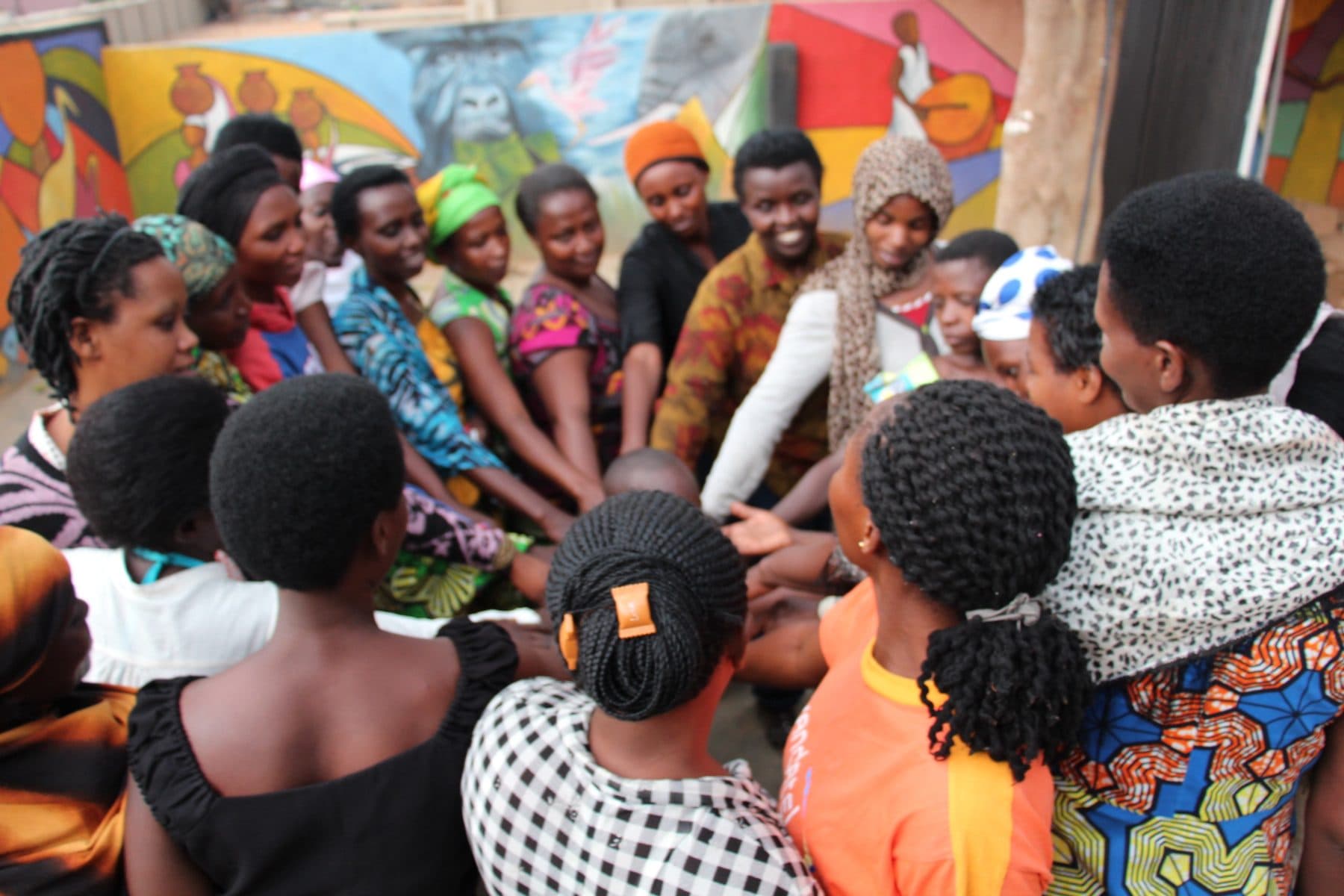
The Mama Rwanda Women's Poverty Graduation Initiative is Irembo Foundation's full economic-empowerment program for single mothers and vulnerable women living in extreme poverty. It combines practical livelihood skills with productive capital, savings, ongoing coaching, social support, childcare and access to markets. The goal is not temporary relief. It is a measurable move toward reliable income, household resilience and independence.
It begins in Masaka Sector, Kicukiro District, in the City of Kigali. As results are proven, the model expands responsibly across Kicukiro and then to other Rwandan communities. Irembo Foundation brings community knowledge and experience supporting more than 100 single mothers; Irembo US raises funding, strengthens donor accountability and builds international partnerships.
This initiative is separate from the Mama Rwanda Vocational Training Center building project. You can fund the women's program without funding land or construction.
Why it is needed
Rwanda has made real progress against poverty, yet its 2023/24 household survey still reported a national poverty rate of 27.4%. For a single mother, finishing a short course does not automatically create a livelihood. She may still lack tools, working capital, childcare, transport, savings, records, customers and a trusted mentor. One medical emergency or school fee can wipe out the little she has.
The graduation model tackles these connected barriers together, as one pathway, and uses home-level assessment to reach the women in the most serious hardship.
The change we work for
Graduation doesn't mean every hardship disappears. It means a woman's household can earn, save, handle shocks and plan ahead, shown by clear evidence.
| From | Toward |
|---|---|
| Irregular or no income | A working livelihood with documented sales and income |
| No productive assets | Tools, inventory or livestock used to earn income |
| No emergency savings | Regular savings and a savings group |
| Training without capital | Skills linked to seed capital, coaching and customers |
| Caregiving that blocks participation | Child-safe attendance and childcare support |
| Isolation and low bargaining power | Peer groups, mentors and market connections |
Who the initiative serves
Adult women caring for children or other dependents in extreme hardship. Priority is set by a transparent assessment, never by personal relationships or informal promises.
- Single mothers with no reliable source of household income
- Women responsible for children whose basic needs or schooling are at risk
- Women without productive assets, savings or access to fair capital
- Survivors of violence, displacement or severe household disruption who can take part safely
- Women ready to attend training, join a peer group, save regularly and work with a mentor
- Women not already running a stable, adequately financed business
How the pathway works
- 1
Identify households fairly
Community wealth ranking, referrals, home visits and a documented baseline find the women facing the greatest barriers.
- 2
Build a personal graduation plan
Each woman sets an income pathway, household goals, childcare needs and the risks that could interrupt her progress.
- 3
Learn practical skills
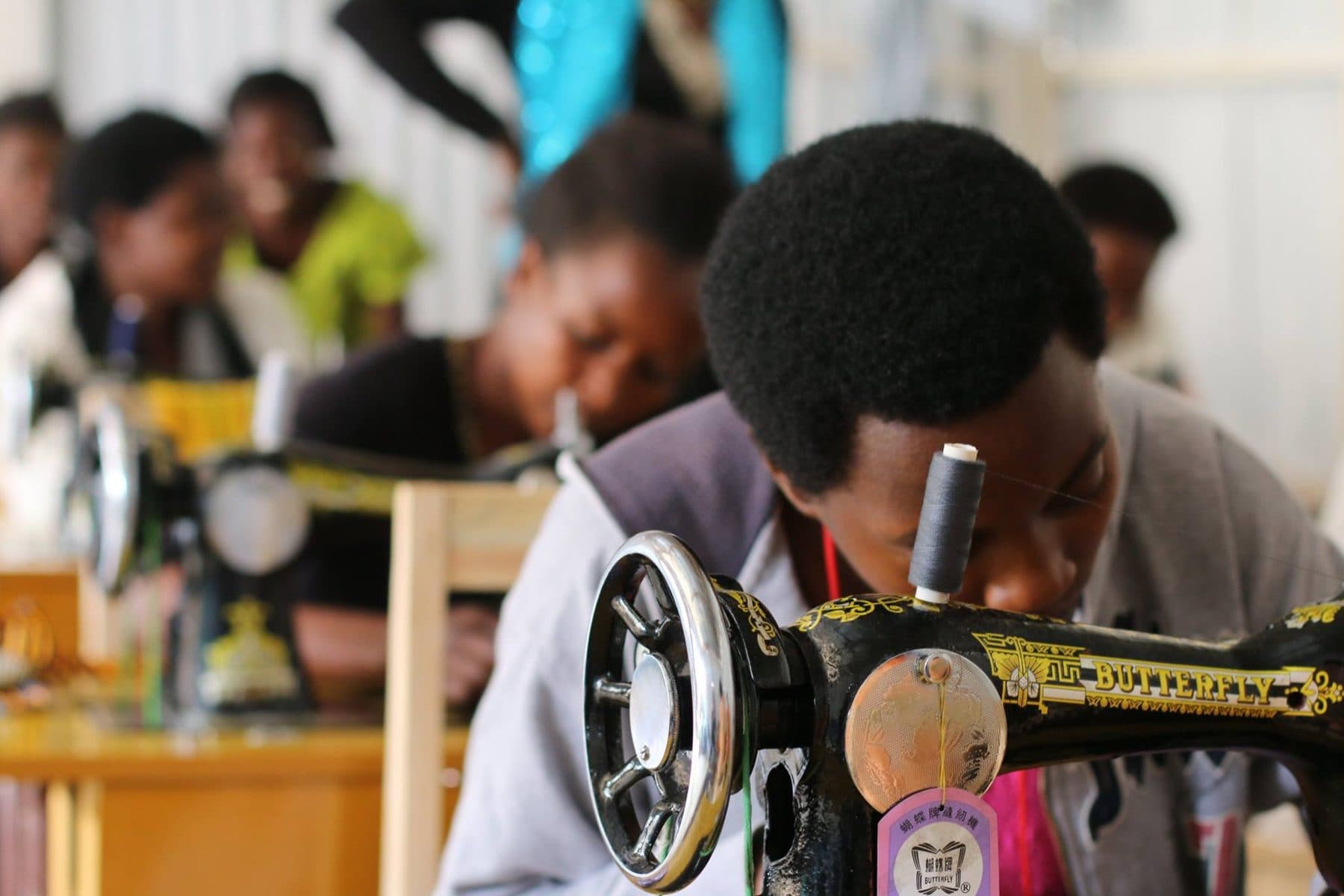
A marketable livelihood plus costing, pricing, customer service, recordkeeping, digital and financial literacy, and safe work.
- 4
Receive productive capital
Approved participants receive tools, inventory or group seed capital tied to a verified business plan. It is not an unrestricted cash gift.
- 5
Join enterprises and savings groups
Women launch individual livelihoods or three-woman group enterprises, and save together with discipline and mutual support.
- 6
Work with a mentor
Local mentors visit regularly, review records, solve problems and help women recover from setbacks.
- 7
Remove childcare barriers
Child-safe participation, childcare support and flexible scheduling let mothers attend and run their businesses.
- 8
Reach customers
Links to local buyers, employers, cooperatives, hospitality businesses and suitable HAC sales channels.
- 9
Graduate on evidence
Income, savings, business activity, food security, resilience and children’s well-being are measured against clear standards.
Livelihood pathways
Chosen by local demand, not training preference. First cohorts focus on work that can start at modest cost and has a clear route to paying customers.
| Pathway | Examples | Where customers come from |
|---|---|---|
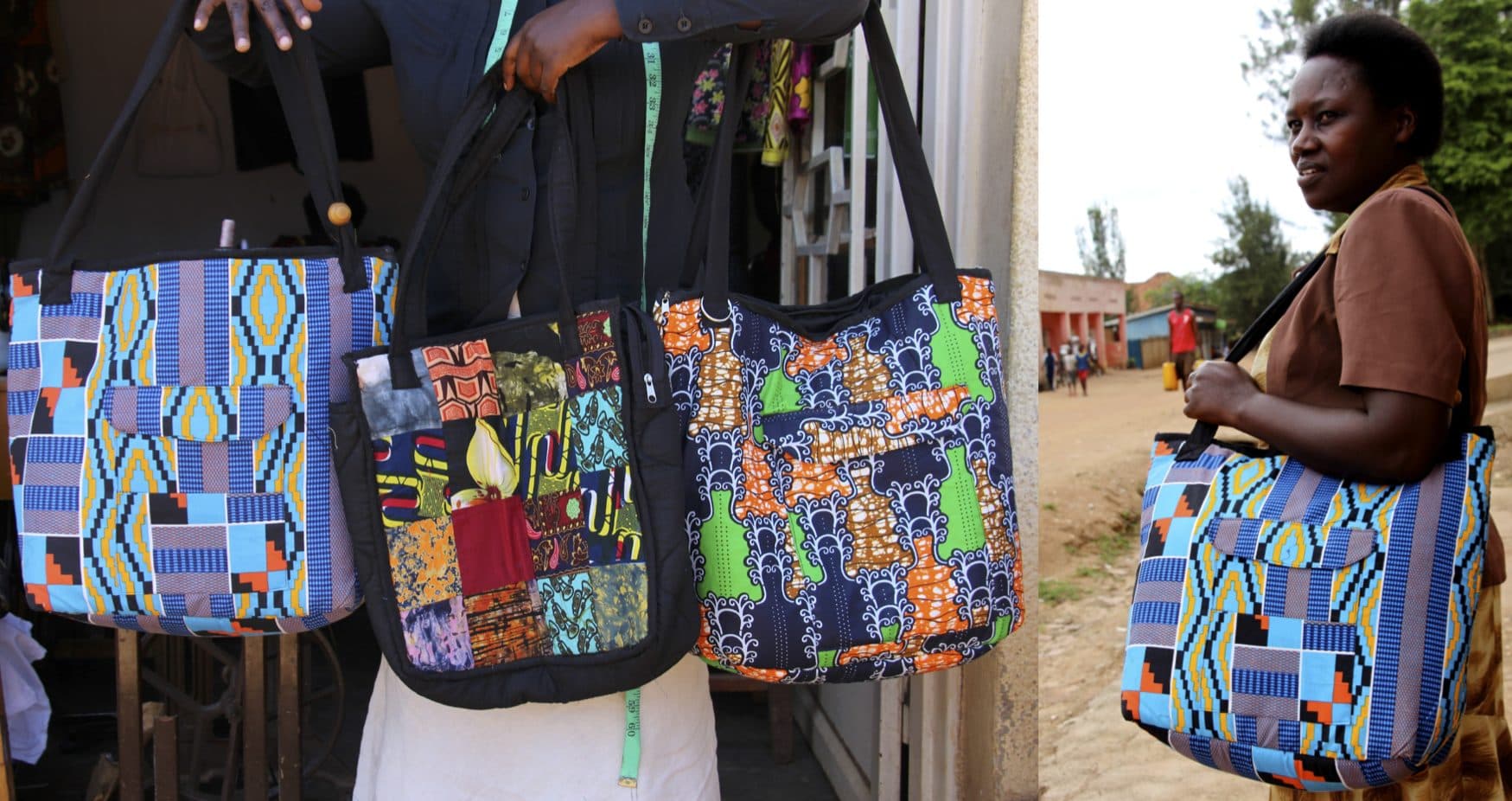
| Textiles and artisan production | Sewing, uniforms, home goods, woven and handcrafted products | Local orders, schools, hospitality buyers and selected HAC channels |
| Beauty and personal services | Hair braiding, salon and mobile beauty services | Neighborhood clients, referrals and service packages |
| Food and household enterprise | Food processing, catering, produce and household essentials | Community demand, events and small shops |
| Agriculture and climate-smart livelihoods | Small livestock, horticulture and value-added farm products | Local markets, cooperatives and buyer agreements |
| Digital and administrative services | Basic digital services, mobile-money support and small-business administration | Local enterprises and community service points |
Where we work
Start: Masaka Sector
Women are selected with local leaders, community organizations, social-protection actors and trusted referral partners. The program can begin in partner venues before the training center is built.
Next: across Kicukiro
Gahanga, Gatenga, Gikondo, Kagarama, Kanombe, Kicukiro, Kigarama, Niboye and Nyarugunga, based on verified need, mentor capacity, markets and safeguarding readiness.
Later: across Rwanda
New districts through trained local mentors and qualified partners, each after a needs assessment, market scan, partner review and safeguarding check.
Funding plan
Five-year goal: $1,000,000 (RWF 1,475,000,000, at US$1 = RWF 1,475). This funds program delivery only. Land and construction of the training center have their own separate budget.
| Phase | USD | RWF | What it achieves |
|---|---|---|---|
| Launch and 90-day pilot | $20,000 | 29,500,000 | Enroll 60 women, launch enterprises and test the delivery model |
| Complete pilot and first expansion | $130,000 | 191,750,000 | Finish 12 months of support and reach 300 women in total |
| Regional expansion | $350,000 | 516,250,000 | Reach 1,000 women in total and strengthen local delivery |
| Five-year scale | $500,000 | 737,500,000 | Reach 2,500 women in total through qualified partners |
| Total | $1,000,000 | 1,475,000,000 | Five-year program goal |
Where the money goes
Five-year use of funds
- Productive assets and enterprise capital$380,000 · 38%
- Livelihood, business and savings training$100,000 · 10%
- Childcare and participation support$100,000 · 10%
- Local delivery team and field operations$120,000 · 12%
- Mentoring and household coaching$80,000 · 8%
- Monitoring, evaluation and learning$70,000 · 7%
- Market access and digital systems$50,000 · 5%
- Safeguarding and social-support referrals$40,000 · 4%
- Audit, compliance and administration$40,000 · 4%
- Contingency and risk reserve$20,000 · 2%
Launch pilot budget
90 days, 60 women, 20 group enterprises
| Productive capital for 20 group enterprises | $9,000 |
| Mentor recruitment, training and three-month stipends | $3,000 |
| Business, savings and livelihood training | $1,500 |
| Household targeting and baseline assessments | $900 |
| Savings-group and recordkeeping materials | $800 |
| Childcare and transport support | $1,500 |
| Monitoring, home visits and data collection | $1,000 |
| Local operations, communications and compliance | $800 |
| Contingency | $1,500 |
| Total | $20,000 |
Ways to fund the initiative
$100
Training materials, recordkeeping tools or participation support
$500
Productive capital and first business inputs for one group enterprise
$1,500
Childcare and transport support across the launch cohort
$5,000
Mentor preparation, coaching and field follow-up for a cohort
$20,000
The complete 90-day launch pilot for 60 women
$50,000+
Several cohorts, evaluation, market development or expansion
Gift examples are planning illustrations. Final use follows approved budgets, donor restrictions and participants' needs. Donors support the program; no participant is assigned to or owned by a donor.
What graduation means
A woman graduates on evidence, not attendance alone.
- Livelihood
- An active livelihood with documented sales over a sustained period
- Income
- Household earnings improve from her starting point and become more consistent
- Savings
- She saves regularly and keeps an emergency reserve or active savings-group balance
- Resilience
- The household manages common expenses and shocks without selling essential productive assets
- Business practice
- She keeps basic records and separates business money from household spending
- Children's well-being
- Children's school attendance and essential needs are monitored for improvement
- Social support
- She stays connected to a peer group, mentor or community support network
Accountability is part of the model
We measure whether women are building lasting livelihoods, not just whether they attended a course. Every participant completes a baseline before receiving capital, with reviews at about 3, 6 and 12 months. Results are reported in aggregate to protect privacy, and donors receive clear reports on the phase they support.
| Pilot measure | Target |
|---|---|
| Women enrolled | 60 in the launch cohort |
| Training completion | At least 85% complete the core modules |
| Businesses launched | 20 group enterprises or an approved equivalent |
| Mentor coverage | Every participant has a trained mentor |
| Savings | At least 80% save consistently by month six |
| Business survival | At least 80% of businesses still active at 12 months |
| Income | Change measured against each woman’s verified baseline |
| Capital integrity | Every transfer documented and checked against an approved plan |
| Safety | Safeguarding incidents documented, referred and resolved under policy |
| Stage | Women | Enterprises |
|---|---|---|
| Launch pilotMasaka Sector | 60 | 20 group enterprises |
| First expansionMasaka and priority Kicukiro communities | 300 in total | About 100 |
| Regional expansionKicukiro and selected Kigali or nearby districts | 1,000 in total | About 330 |
| Five-year scaleMore Rwanda locations chosen on evidence and partner capacity | 2,500 in total | About 830 |
Protecting participants
- No woman pays a fee or gives a gift to join.
- Selection uses written criteria and a review process.
- Stories and photos are shared only with informed, voluntary consent.
- Business grants are documented, approved and monitored.
- Childcare follows child-protection procedures.
- Complaints can be made confidentially, without retaliation.
- Referrals are in place for violence, health, legal and urgent protection needs.
Help women build livelihoods that last
We welcome funders, employers, buyers, vocational specialists, financial institutions, technology partners, safeguarding organizations and community partners. Each partnership is built around a practical contribution.
- Local authorities and social-protection actors
- Coordination, referrals and alignment with local services
- Training institutions and specialists
- Curriculum, instructor development and quality assurance
- Financial institutions and savings partners
- Suitable accounts, payment tools and financial literacy
- Employers, cooperatives and buyers
- Market information, purchasing, placements and apprenticeships
- Health, legal and protection organizations
- Safe referral pathways for urgent needs
- U.S. and international funders
- Pilot capital, multi-year support and responsible expansion
Questions and answers
›Is this only a vocational training program?
No. Skills are one part. The initiative combines skills with productive capital, savings, mentoring, childcare support, market access and follow-up at home.
›Does graduation mean a woman will never face poverty again?
No program can promise that. Graduation means she meets clear economic and resilience standards that show real improvement from where she started.
›Where does the program operate?
It begins in Masaka Sector, Kicukiro District. Expansion across Kicukiro and other parts of Rwanda depends on verified need, results, funding, mentor capacity and safeguarding readiness.
›Is the training center construction included in this budget?
No. The US$1 million goal funds program delivery over five years. Land and construction for the Mama Rwanda Vocational Training Center are a separate project.
›How are women selected?
Through transparent vulnerability criteria, referrals, home verification and a baseline assessment. No woman pays a recruitment fee.
›How does Irembo prevent dependency?
Support is built around productive assets, skills, savings, business discipline and mentoring. The goal is a woman’s own capacity to earn, not ongoing cash assistance.
›How are donations handled?
Irembo US raises U.S. support and is accountable to donors. Funds for work in Rwanda follow approved budgets, written agreements, documentation, monitoring and the law.
Help a Mama Rwanda woman build a sustainable livelihood
$20,000 launches the full 90-day pilot for 60 women. Every gift, large or small, moves a mother closer to steady income and a safer future for her children.
Poverty figure: National Institute of Statistics of Rwanda, EICV7 Poverty Profile Report 2023/24. Amounts use a planning rate of US$1 = RWF 1,475 and will be updated before grant applications. Participant photos are shared with consent.